
VLA research and evaluation
Train and evaluate vision-language-action models on arms that other labs already publish with.
The problem
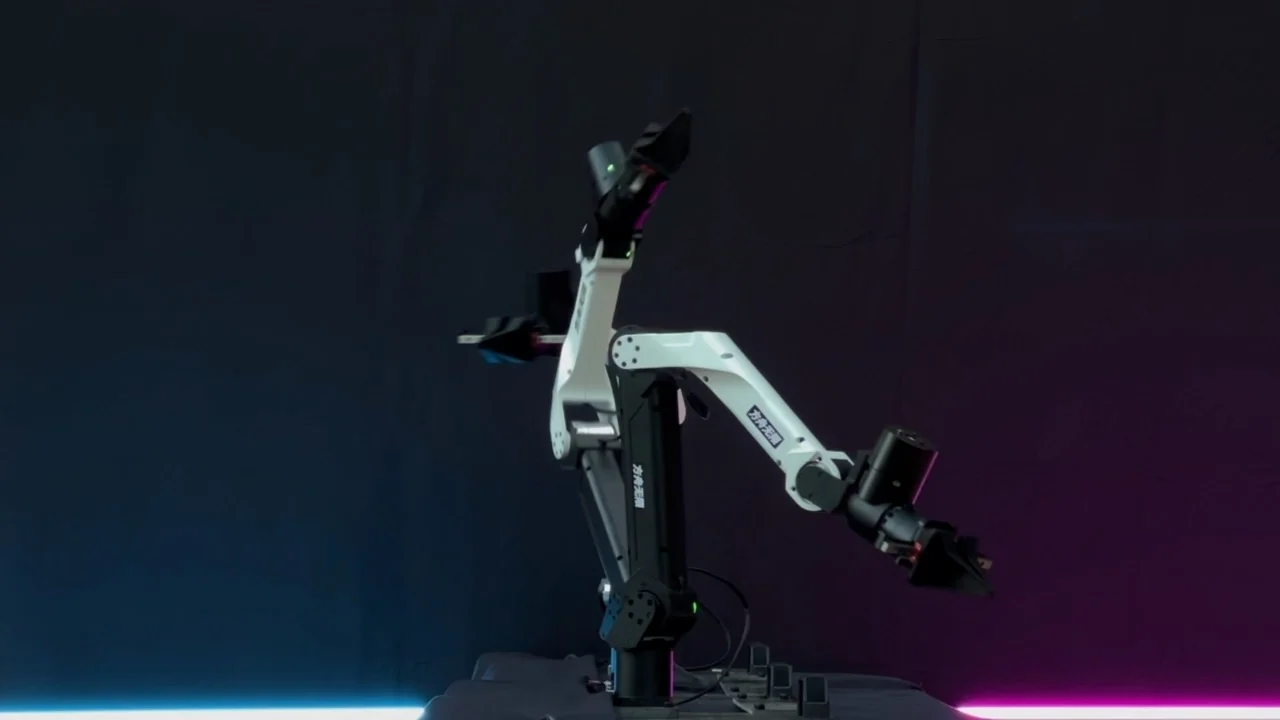
Foundation-model work needs identical robots across stations, a stable SDK and a way to compare results with other labs. Using hardware that appears in published work makes results easier to reproduce.
How it works
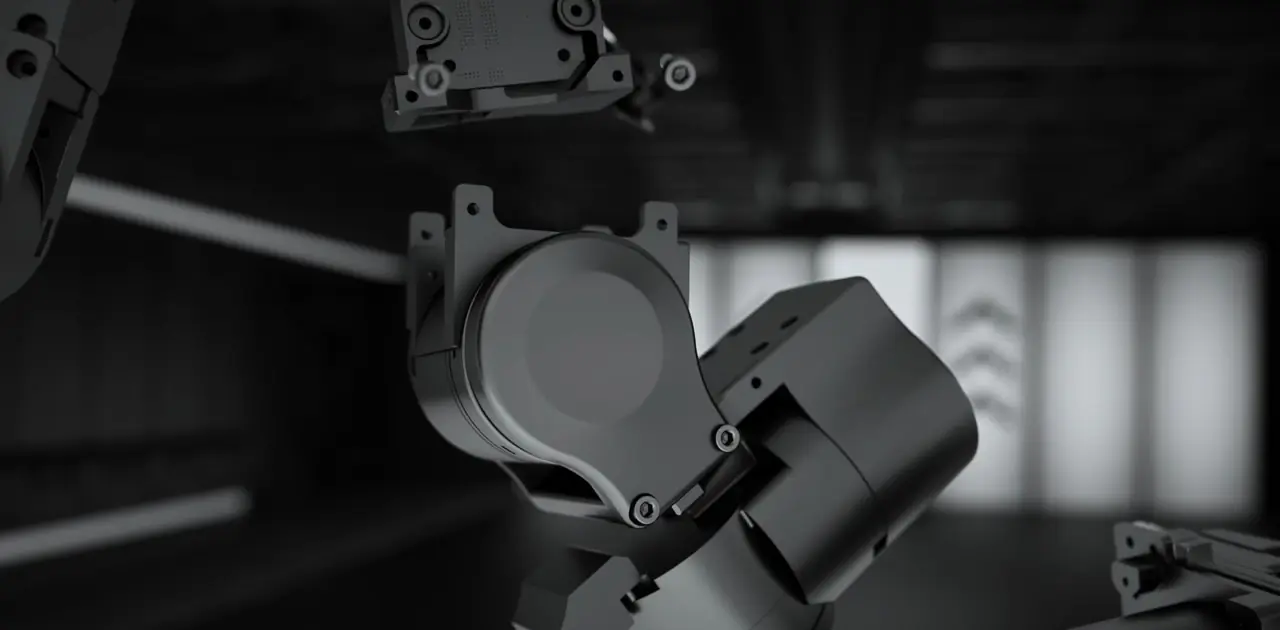
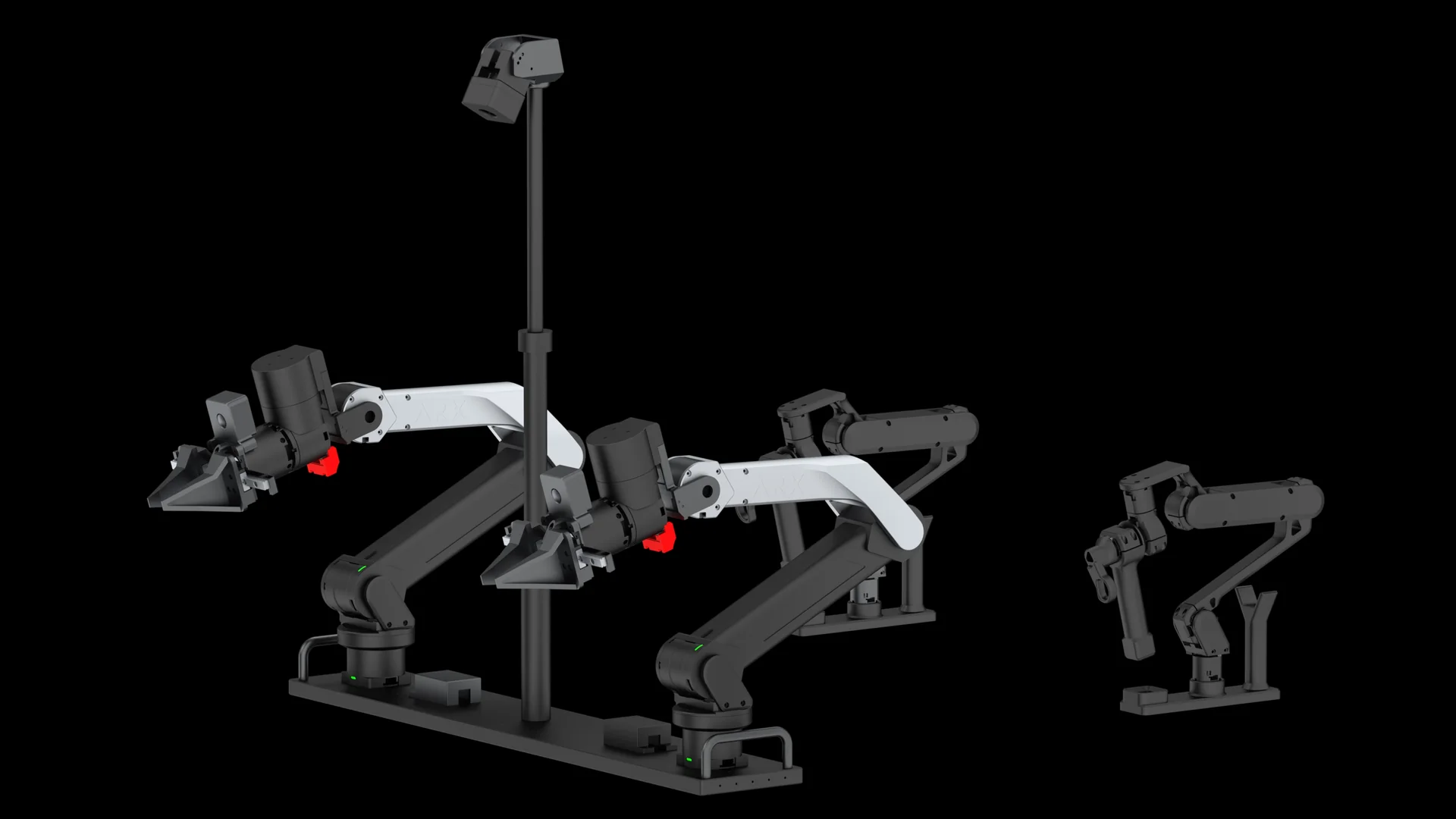
- 01Collect fine-tuning data on bimanual stations.
- 02Run policies through arx5-sdk or ROS 2 at a 500 Hz joint loop.
- 03Evaluate on identical stations, or on public benchmarks that use ARX arms.
Evidence
Public sources only. All research
- π0's training mixture includes a bimanual ARX platform.
- RoboChallenge lists Arx5 among its physical evaluation platforms.
- RoboTwin 2.0 includes ARX-X5 as a simulated embodiment.
Questions
Do you support openpi or LeRobot?
ARX's own pipeline is ROS 2 and ACT-based. Tell us the framework you use and we'll confirm what is available before you order.
Can we buy many identical stations?
Yes. Ask for a quote with the number of stations; we confirm lead time and volume pricing where it applies.
Further reading
Choosing a robot arm for VLA research in 2026: X5, PiPER, WidowX AI and SO-101 compared
Published specs and list prices for four popular research arms, ARX X5, AgileX PiPER, Trossen WidowX AI and SO-101, and how to choose for imitation le…
Read →Research built with ARX arms: 25 projects from 2024 to 2026
Robot learning projects that ran on ARX hardware, from π0 to Xiaomi-Robotics-1, grouped by topic, with the evidence for each.
Read →Price this setup.
Tell us how many stations and where they ship.