Leader–follower teleoperation: a practical guide for robot learning labs
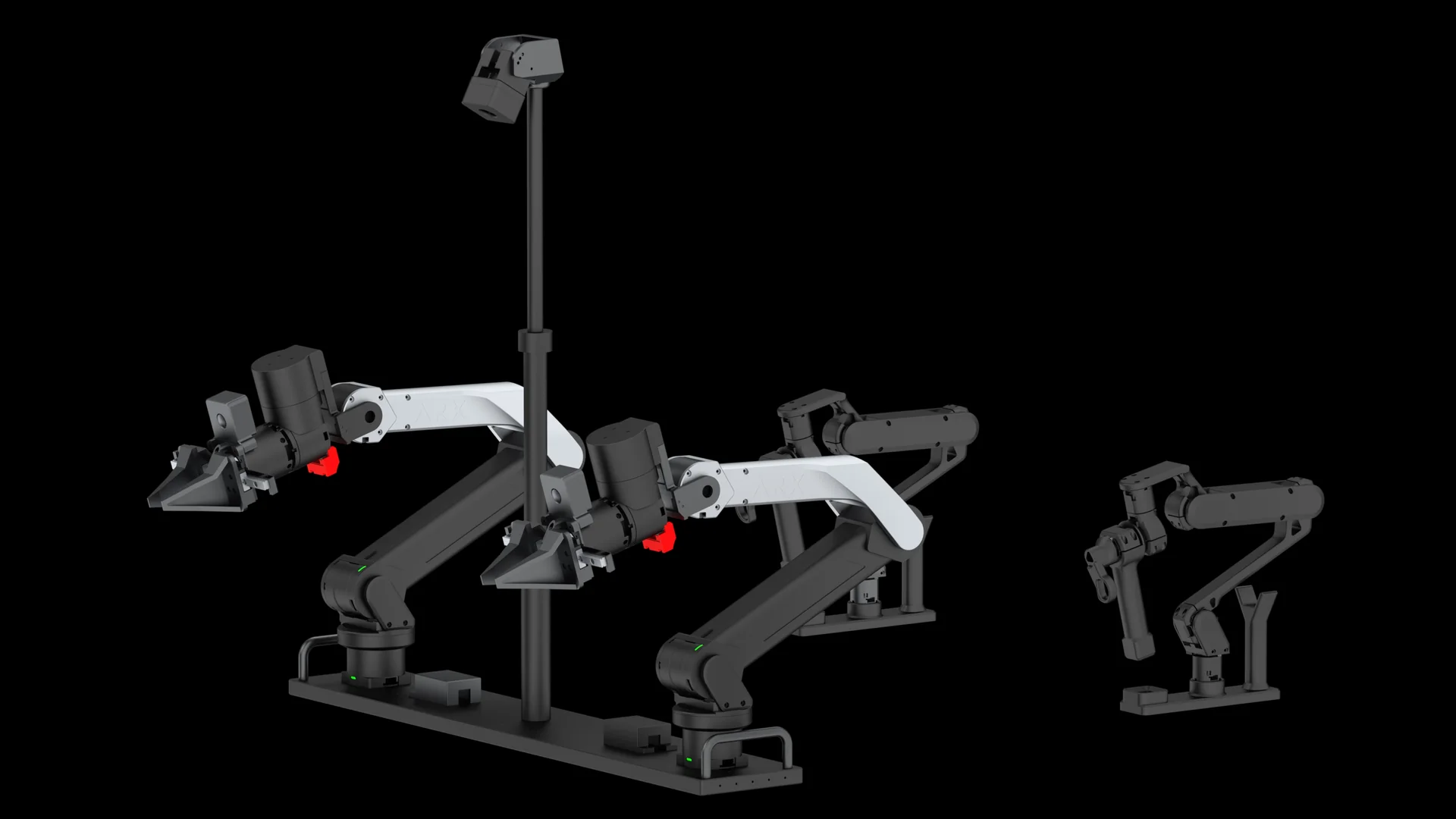
Short answer: in leader–follower teleoperation a person moves a lightweight leader arm by hand and a follower arm copies it joint by joint. Cameras record the scene while the software logs the follower's joint states. Each recording is one demonstration, and many demonstrations become training data for imitation-learning policies such as ACT, or fine-tuning data for vision-language-action (VLA) models.
Why imitation-learning labs use it
- The demonstration is already in the robot's action space. When the leader and follower have the same kinematics, joint angles map one to one. There is no inverse kinematics to solve and no retargeting step that can distort the motion.
- Operators learn it in minutes. Moving an arm by hand is closer to doing the task yourself than steering a gripper with a joystick.
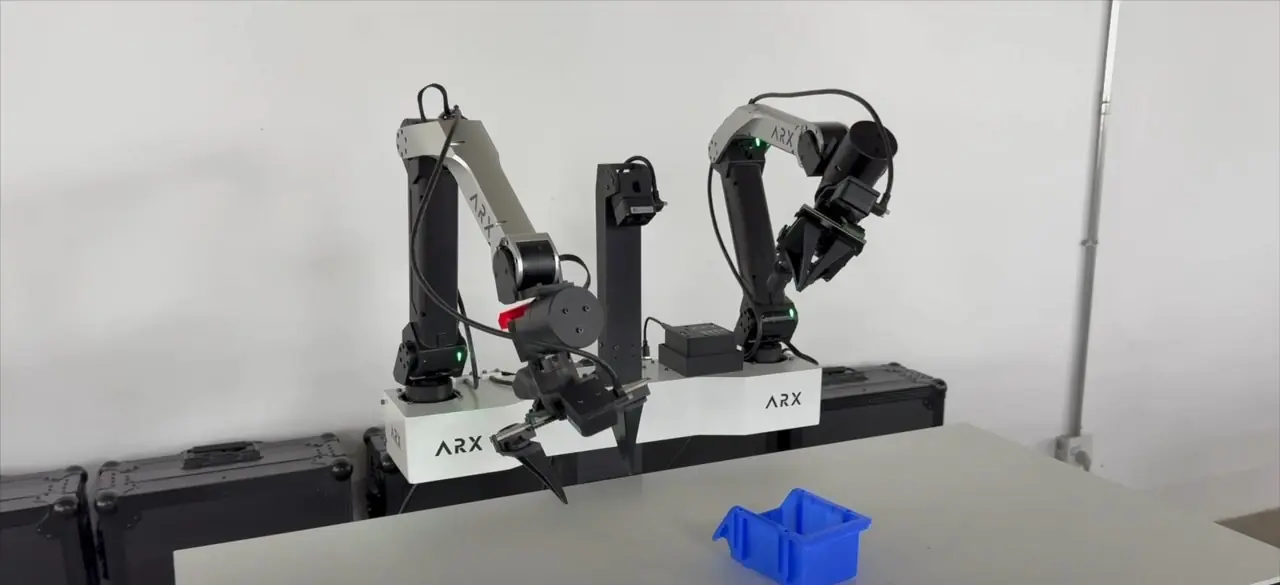
- It scales to two arms. Two leader arms drive two follower arms, so bimanual tasks such as folding, sorting or handing an object across are recorded in one take.
ModPack, a 2026 Stanford teleoperation framework, uses this idea directly: its 6-DoF ARX5 leader arms are kinematically equivalent to the ARX5 follower arms, which allows direct joint-space teleoperation (ModPack).
What a station needs
| Part | What it does | In ARX's documented setup |
|---|---|---|
| Follower arms | Carry out the task; their joint states are recorded | X5, R5 or the arms on AC one, LIFT 2 and X7 |
| Leader arms | Moved by the operator | Leader arms supplied with the bimanual platform |
| Cameras | Record what the policy will see | Intel RealSense D405 on the head and on each wrist |
| Computer | Runs control, recording and training | Ubuntu 24.04 with an NVIDIA GPU recommended |
| Bus adapters | Connect arms to the computer | CAN, with each arm bound to a fixed channel |
| Recording software | Starts, stops and saves episodes | ARX's 01_collect.sh (ROS 2) |
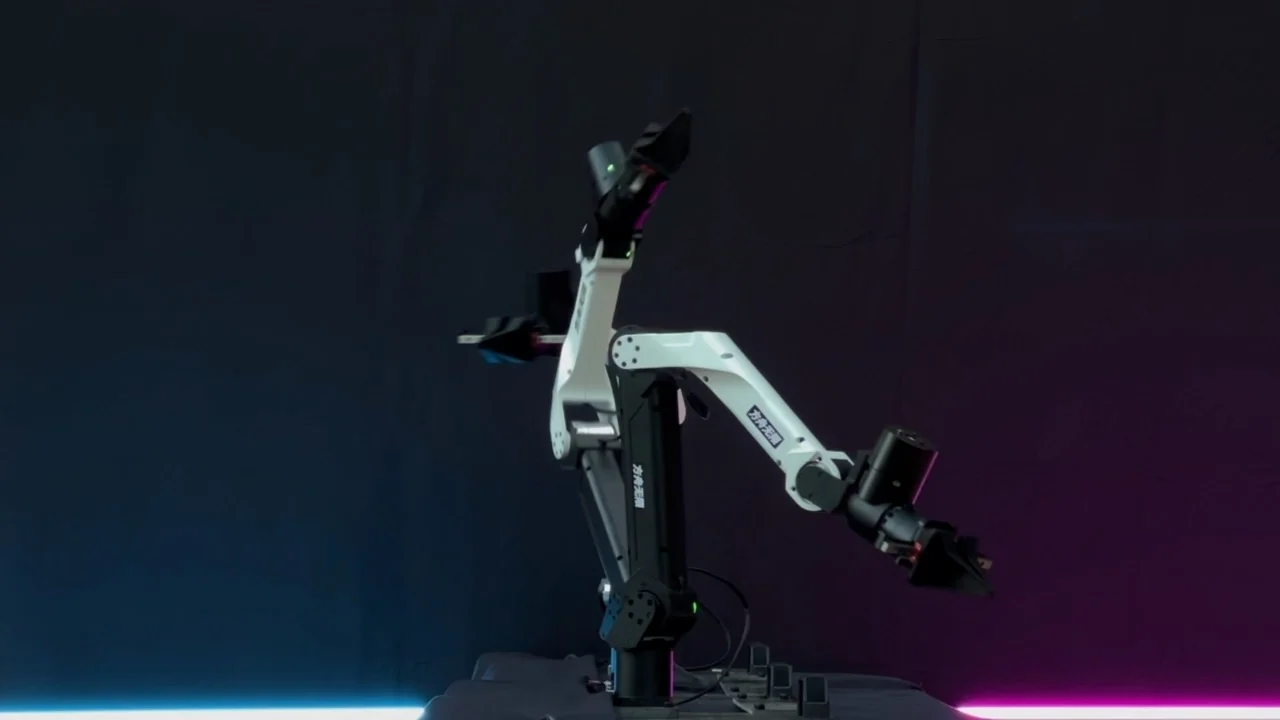
Force-controlled followers help in two ways. They comply when they touch something, and the same arms can be run in gravity compensation and moved by hand. See why force control matters for imitation learning.
Leader–follower, VR or SpaceMouse?
| Method | Best for | Watch out for |
|---|---|---|
| Leader–follower arms | Tabletop and bimanual tasks with fine motion | Needs a second set of arms per station |
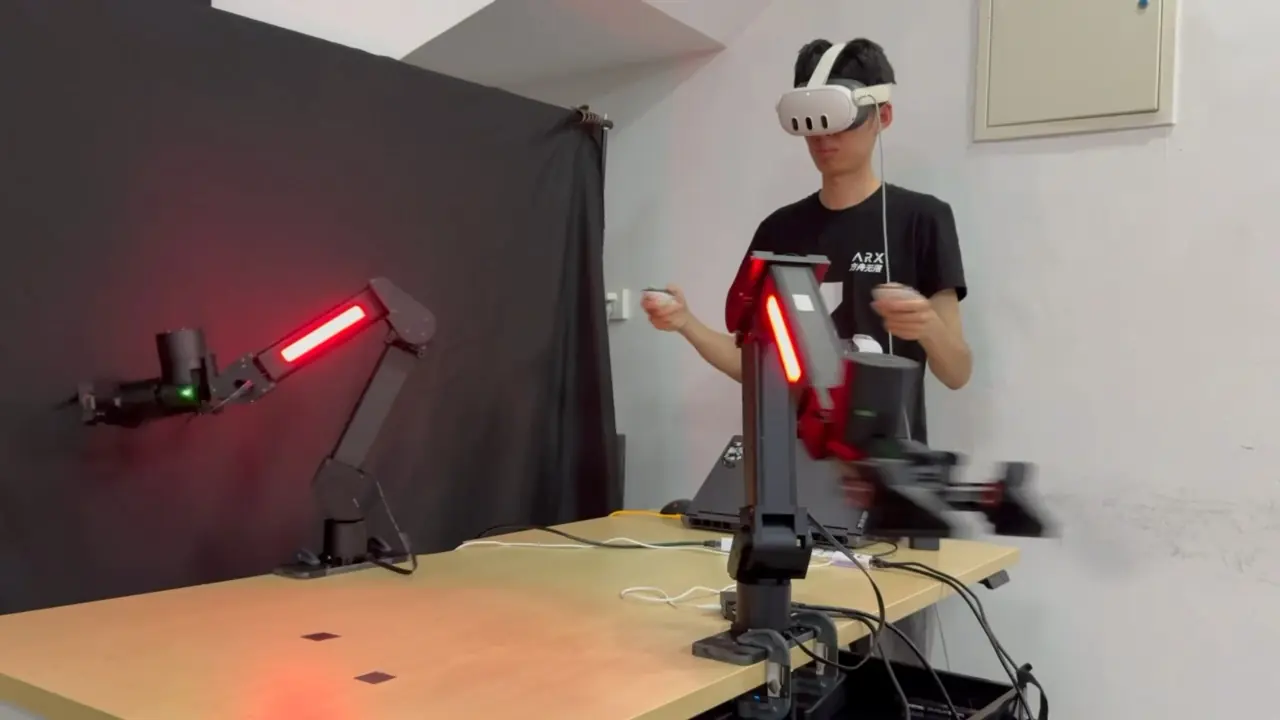
| VR headset | Mobile platforms and humanoids, where the operator also controls the head or base | Hand tracking adds a retargeting step |
| SpaceMouse or keyboard | Testing a single arm in Cartesian space, teach and replay | Slow for long or two-arm tasks |
ARX supports all three. Leader arms come with the bimanual platform, ARX publishes ARX_VR for Meta Quest 3 and documents VR teleoperation for X7s and LIFT2s, and Stanford's arx5-sdk includes keyboard, SpaceMouse and teach-and-replay examples for X5.
How recording works on ARX systems
On AC one, the operator uses buttons. Pressing 2 moves the arms to the start pose. Pressing 1 starts recording and the computer says "Go". Pressing 2 again resets the arms, saves the episode and says "Safe". On LIFT2s and X7s, a long press on the arm reset starts and saves an episode in the same way. Training and deployment are two more scripts, 02_train.sh and 03_inference.sh. The full walkthrough is in collect, train, deploy.
Five habits that improve demonstrations
- Start every episode from the same pose. Automatic reset on save makes this easy.
- Keep camera mapping fixed. Bind each camera's serial number to head, left and right so a swapped cable cannot mix up views.
- Calibrate zero positions once and leave them. ARX documents calibration commands per arm, and recommends calibrating only when needed.
- Fix the variables you are not studying. On mobile platforms, ARX shows how to hold the lift at a fixed height during collection and inference.
- Keep stations apart on the network. Give each ROS 2 station its own
ROS_DOMAIN_ID.